“Pedagogical beliefs go deeper than technological capability or accessibility; beliefs define how teachers teach both with and without technology”
Ertmer, Addison, Lane, Ross, & Woods, 2001
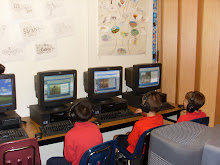
When students use technology in my classroom I have several cognitive objectives. I want my students to be comfortable with a variety of digital tools. I try to reinforce basic skills with the younger students such as inserting USB flash drives, using the keyboard, logging in using passwords, and finding folders on the desktop. I strive to give older students an appreciation and understanding of Microsoft Office tools, digital cameras, and video cameras. I want a student to be handed an assignment and say to himself, “I could do this better, faster, and more creatively by using Power Point or Publisher”. Overall I would like students to have a grasp of the technology I can make available to them and a comfort with the idea of using brand new digital tools.
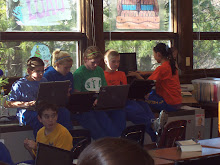
Along with cognitive objectives I have for my students, I’m concerned with the affective outcomes when students use technology. I want my students to feel a sense of community with their classmates and teachers. Technology cannot replace the connections they develop in a classroom setting and the benefits that can be gained with working collaboratively on a project. I think the key to technology is the integration of it into the teaching experience. Students still need verbal encouragement, hand written comments, and the experience of physical experimentation and play. Our students need to be skilled in the use of digital tools but it’s also important that they develop good social skills and be able to interact with their peers. Technology does give some otherwise socially challenged students an area to excel. And these students may have a more positive outlook on school because they find success in this area. In both cases it is important for the teacher to be defining how technology best works in the classroom.
Wednesday, April 8, 2009

Saturday, April 4, 2009
Week 1 Online Learning Journal
I frequently integrate technology into the curriculum because I’m the computer teacher. And since this is my first year in this role, I’m learning about technology along side my students. I use laptops and desktops in the computer lab and focus on students becoming comfortable with Microsoft Office Suite as well as digital cameras and video cameras. But I also integrate technology into my seventh grade religion lessons.
Just last week I was finishing up our unit on the Theology of the Body. This unit addressed abstinence and the teachings of Pope John Paul II. I attended a conference to help me teach about this topic and I had some great speakers come to our class to supplement the text. But I felt that I hadn’t provided enough opportunities for the students to collaborate and apply what we had discussed in class. I decided to assign the project of choosing four examples of movies, books, or TV shows. Two were to be examples of selfish love and two were to be examples of giving love. Students were then to rewrite the plots of the two selfish examples so that they were now more giving but still entertaining to an audience. I required Power Point presentations for this project and divided the class into groups of three. I also reserved computer lab time so that I could monitor their work and observe group participation and evidence of problem solving.
My motivation for using technology in this assignment and in others is the response I see from my students. Immediately they are more receptive to an assignment that involves computers, the Internet, or digital cameras. In this particular project, students worked together and found pictures from different movies and books to add to their slides. I also like to see students, who struggle with certain computer skills, work side by side with other classmates and begin to feel more comfortable. I want my students to feel optimistic and positive about new tools in technology. Technology will always be changing and I feel this positive outlook will allow these children to successfully adapt.
Just last week I was finishing up our unit on the Theology of the Body. This unit addressed abstinence and the teachings of Pope John Paul II. I attended a conference to help me teach about this topic and I had some great speakers come to our class to supplement the text. But I felt that I hadn’t provided enough opportunities for the students to collaborate and apply what we had discussed in class. I decided to assign the project of choosing four examples of movies, books, or TV shows. Two were to be examples of selfish love and two were to be examples of giving love. Students were then to rewrite the plots of the two selfish examples so that they were now more giving but still entertaining to an audience. I required Power Point presentations for this project and divided the class into groups of three. I also reserved computer lab time so that I could monitor their work and observe group participation and evidence of problem solving.
My motivation for using technology in this assignment and in others is the response I see from my students. Immediately they are more receptive to an assignment that involves computers, the Internet, or digital cameras. In this particular project, students worked together and found pictures from different movies and books to add to their slides. I also like to see students, who struggle with certain computer skills, work side by side with other classmates and begin to feel more comfortable. I want my students to feel optimistic and positive about new tools in technology. Technology will always be changing and I feel this positive outlook will allow these children to successfully adapt.
Subscribe to:
Posts (Atom)